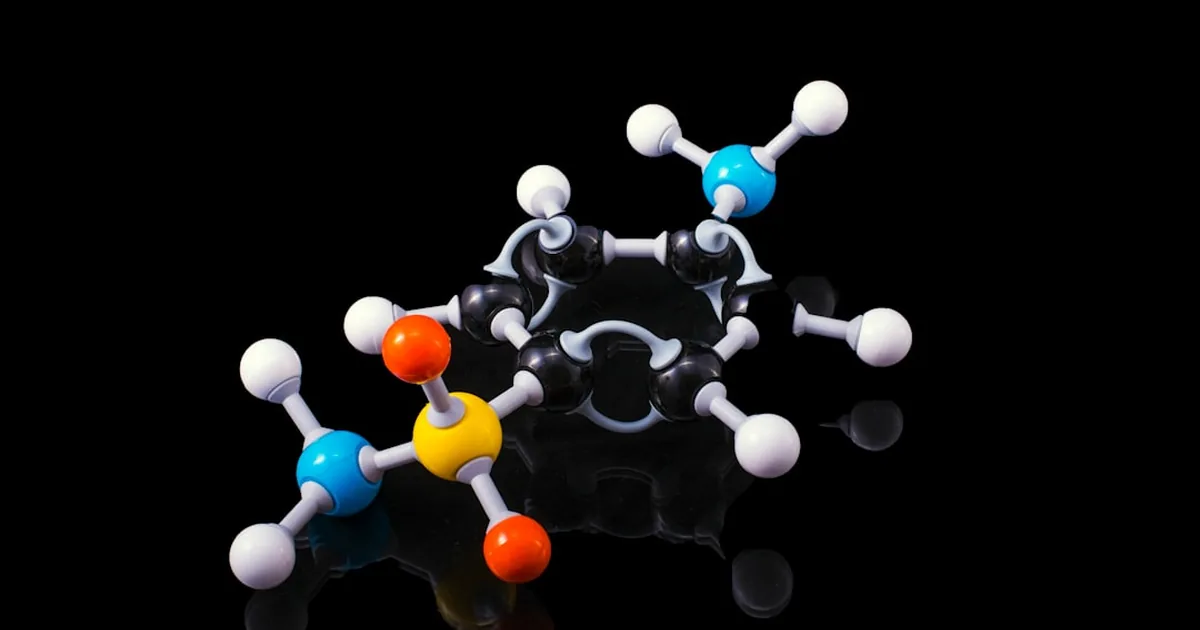
Here's the strange detail about ipamorelin: it activates the same receptor as ghrelin, the hormone your stomach releases when it's empty. The compound is sold for research use only and isn't approved by any regulator for medical purposes, but it has been a fixture of selective-secretagogue pharmacology since the late 1990s. This article walks through what ipamorelin is at the chemical level, how its receptor works, why a single in-vitro selectivity result made it interesting to endocrinology labs, and how it sits next to other peptides on the growth-hormone axis. Research-grade material is not equivalent to any FDA-approved pharmaceutical product, and no pharmaceutical product carries this name.
What Ipamorelin Is — Sequence, Origin, and Chemistry
What this section tells you: ipamorelin is a five-amino-acid synthetic peptide built by Danish medicinal chemists in the late 1990s as part of a search for cleaner growth-hormone secretagogues.
Structurally, ipamorelin is a pentapeptide with the sequence Aib-His-D-2-Nal-D-Phe-Lys-NH2. Its molecular formula is C38H49N9O5, its molar mass is roughly 712 g/mol, and its CAS number is 170851-70-4. The compound was developed at Novo Nordisk under the code NNC 26-0161, derived from the older growth hormone-releasing peptide GHRP-1 by stripping out the central Ala-Trp dipeptide — a deliberate edit that, as the chemistry team would later confirm, was responsible for the cleaner pharmacology that distinguishes it from earlier compounds in the family.
Several of the building blocks are unusual. The N-terminal aminoisobutyric acid (Aib) is a non-natural amino acid that resists enzymatic cleavage. The two D-amino acids — D-2-naphthylalanine and D-phenylalanine — flip the stereochemistry of those residues, again giving the molecule metabolic stability that a straight L-peptide of the same sequence would lack. The C-terminal amide caps the carboxyl end against carboxypeptidases. Net effect: a small, stable peptide whose geometry slots into the hydrophobic pocket that the ghrelin receptor uses to recognize its endogenous ligand.
The pharmacokinetics observed in research models match that engineering — an elimination half-life of roughly two hours and no oral bioavailability in standard formulations. For readers who want a similar level of structural detail on a different peptide in the same product category, see our TB-500 chemical structure article.
How the Ghrelin Receptor Works — The "Hunger Hormone" Receptor Explained
What this section tells you: the receptor ipamorelin engages is the same one your gut talks to when you're hungry, and the selectivity story only makes sense once you understand the receptor's biology.
What ghrelin actually is
Ghrelin is a 28-amino-acid peptide produced mainly by P/D1 cells in the lining of the stomach. Plasma ghrelin rises before meals and falls after them, which is how it picked up the popular nickname "the hunger hormone." Ghrelin is also unusual among peptide hormones: it carries a post-translational n-octanoyl modification on its third serine residue — an eight-carbon fatty-acid tail installed by a single dedicated enzyme called ghrelin-O-acyltransferase, or GOAT. Without that octanoyl tail, des-acyl ghrelin doesn't activate the receptor, which is one of the more striking examples in peptide biology of a small chemical modification governing an entire signaling axis.
The receptor itself: GHS-R1a
The growth hormone secretagogue receptor 1a (GHS-R1a) is a Class A G-protein-coupled receptor. When ghrelin engages it, the receptor couples preferentially to Gαq, which activates phospholipase C, generates inositol trisphosphate (IP3), and releases calcium from intracellular stores. Downstream of that first event, the receptor recruits a cascade of kinases — MAPK, PKA, PKB/AKT, AMPK — each carrying the signal into different cellular programs depending on the tissue. Cryo-EM structures published in 2021 resolved how the octanoyl chain inserts into a hydrophobic pocket between transmembrane helices 6 and 7, explaining at the atomic level why acylation is non-negotiable for the natural ligand and why synthetic agonists like ipamorelin work by engaging the same pocket directly.
Where the receptor lives in the body
GHS-R1a isn't a single-tissue receptor. It's expressed at high levels in the pituitary, where its activation triggers growth-hormone secretion, and it's also abundant in the hypothalamus — specifically the ventromedial and arcuate nuclei that govern appetite and energy balance. Outside those classical sites, the receptor turns up in the hippocampus (where research models link it to learning and long-term potentiation), the ventral tegmental area (reward circuitry), the liver, skeletal muscle, and even cardiomyocytes. That wide distribution is why the ghrelin axis touches so many physiological systems at once — hunger, growth, reward, memory, peripheral metabolism — and why interpreting any compound that engages this receptor means keeping the full anatomy in mind.
A pharmacologically unusual feature: constitutive activity
GHS-R1a is one of the most constitutively active GPCRs known. Put plainly: the receptor produces a tonic signal even when no ghrelin is bound — it's partially "on" by default. Genetic work has shown that loss-of-constitutive-activity variants are linked to familial short stature, indicating that this baseline output is functionally important for normal growth. More recently, liver-expressed antimicrobial peptide-2 (LEAP-2) was identified as an endogenous inverse agonist of GHS-R1a — a counter-regulatory tone the body uses to dampen the receptor's baseline signaling. For research models exposed to a synthetic agonist like ipamorelin, this constitutive baseline is the reason growth-hormone pulses still occur between exposures, and the reason simple occupancy models don't capture the full pharmacology.
Why Ipamorelin Is Called "Selective"
What this section tells you: among the synthetic peptides that engage the ghrelin receptor, ipamorelin was the first to release growth hormone in research models without simultaneously raising cortisol or ACTH.
The selectivity claim comes directly from the original 1998 study by Raun and colleagues at Novo Nordisk, published in the European Journal of Endocrinology. In primary rat pituitary cells, ipamorelin released growth hormone with an EC50 of roughly 1.3 nmol/L and an Emax of about 85% of the GHRP-6 reference — comparable in potency and efficacy to the older compound. In conscious swine, the ED50 was around 2.3 nmol/kg, again very similar to GHRP-6. So far, nothing unusual: the pentapeptide engages the same receptor as the earlier GHRP-class compounds and delivers a similar pituitary response.
What separated the two compounds was what happened on the rest of the endocrine map. GHRP-6 and GHRP-2, when given to animals, raised plasma ACTH and cortisol — the HPA-axis stress hormones. Ipamorelin did not. Even at exposures more than 200 times the threshold for growth-hormone release, the study found no significant ACTH or cortisol response above what is observed with growth hormone-releasing hormone (GHRH) itself. The pentapeptide also left prolactin, follicle-stimulating hormone, luteinizing hormone, and thyroid-stimulating hormone unchanged. That clean profile is the basis for calling ipamorelin "the first selective growth hormone secretagogue," and it's the property that has kept the molecule in the research literature for nearly three decades.
Mechanistically, the absence of an HPA-axis signal points to biased agonism: ipamorelin and GHRP-6 occupy the same orthosteric pocket on GHS-R1a but appear to stabilize subtly different active conformations, with different downstream consequences for which signaling outputs get recruited. A note on terminology: "selective for growth-hormone release" isn't the same statement as "selective for GHS-R1a." Plenty of compounds — MK-677, hexarelin, GHRP-6 — bind GHS-R1a with high specificity. Ipamorelin's claim is specifically about its functional output profile at that receptor.
How Ipamorelin Compares to Other GH-Axis Research Peptides
What this section tells you: a short map of where ipamorelin sits next to the other peptides that show up in growth-hormone-axis research.
Versus GHRP-6 and GHRP-2
Both GHRP-6 and GHRP-2 act on GHS-R1a with potency similar to ipamorelin and release growth hormone with comparable efficacy in animal models. The pharmacological wedge between them is the cortisol/ACTH response described above — present with GHRP-6 and GHRP-2, absent with ipamorelin. GHRP-6 additionally has measurable orexigenic activity in animal models through hypothalamic GHS-R; ipamorelin shows less of that effect.
Versus MK-677 (ibutamoren)
MK-677 engages the same receptor but is a non-peptide small molecule rather than a peptide. Two practical consequences: it's orally bioavailable, and its duration of action in research models is substantially longer than the roughly two-hour elimination half-life seen with ipamorelin. The 2021 Nature Communications cryo-EM work showed that MK-677 occupies essentially the same orthosteric pocket as the acylated tail of ghrelin — and, by extension, the pocket that the lipophilic D-2-Nal residue of ipamorelin engages.
Versus CJC-1295
CJC-1295 is often discussed in the same breath as ipamorelin in research contexts, but it engages a completely different receptor — the GHRH receptor on pituitary somatotrophs — and is structurally a GHRH analog rather than a ghrelin-receptor agonist. The reason the two come up together is pituitary biology: the GHRH axis and the GHS-R axis converge on the same growth-hormone-secreting cells, so probing them in parallel is a common in-vitro design. For a deeper look at the GHRH-analog side of that pairing, see our explainer on CJC-1295 with and without DAC.
Versus hexarelin
Hexarelin is another GHRP-class peptide that binds GHS-R1a. It's more potent than ipamorelin on a molar basis but less selective: like GHRP-6/2, it raises cortisol in animal models. For studies that specifically need a clean GH-axis probe, ipamorelin is the more usual choice.
The shared frame across all of these compounds is that each one is a different chemical probe of the same biology, and the researcher picks among them based on the selectivity profile their experimental question demands.
Clinical Development and Regulatory Status
What this section tells you: ipamorelin's brief journey through the clinical pipeline and the reasons it never reached approval.
After the 1998 discovery work at Novo Nordisk, ipamorelin moved into clinical development under license to Helsinn Therapeutics. The lead indication that emerged was postoperative ileus — the transient gut paralysis that can follow major abdominal surgery — where a ghrelin-mimetic was thought to plausibly accelerate the return of bowel motility. Phase II results were reported by Beck, Sweeney, and McCarter in 2014 in the International Journal of Colorectal Disease. The trial didn't separate from placebo on the primary endpoint, and Helsinn discontinued the program; AdisInsight lists the development status as discontinued.
That outcome is the reason there is no FDA-approved or EMA-approved pharmaceutical product called ipamorelin today. The molecule didn't fail because of a safety signal; it failed because the clinical hypothesis on which the trial was designed didn't hold up.
Two further notes on the regulatory landscape. First, the World Anti-Doping Agency lists growth hormone secretagogues as prohibited at all times in competitive sport, and ipamorelin has been named in several professional-sports anti-doping cases over the past decade. Second, the material that circulates today under the name "ipamorelin" is sold as research-grade chemical for in-vitro and animal-model investigation only. It's supplied lyophilized and is not intended for any human or veterinary use. For a fuller treatment of what that distinction means in commercial terms, see our explainer on what research-grade peptide really means.
Frequently Asked Questions
What is ipamorelin?
Ipamorelin is a synthetic pentapeptide with the sequence Aib-His-D-2-Nal-D-Phe-Lys-NH2, originally developed by Novo Nordisk as a selective agonist of the growth hormone secretagogue receptor 1a (GHS-R1a) — the same receptor activated by the endogenous hormone ghrelin. In research settings, it stimulates the pituitary to release growth hormone without engaging the cortisol or prolactin axes that earlier ghrelin-mimetic peptides activated. It's currently sold for research use only and is not FDA-approved for any medical indication.
Why is ipamorelin called "selective"?
Earlier growth hormone secretagogues in the GHRP family, such as GHRP-2 and GHRP-6, also bind GHS-R1a but additionally raised plasma ACTH and cortisol levels in animal studies. In the original 1998 Novo Nordisk paper, ipamorelin released growth hormone with potency comparable to GHRP-6 but didn't raise ACTH or cortisol — even at exposures more than 200-fold above the GH-release threshold. That separation made it the first GHRP-class peptide with selectivity for the GH axis matching what is seen with growth hormone-releasing hormone (GHRH) itself.
What is the ghrelin receptor and why does ipamorelin act on it?
The ghrelin receptor (GHS-R1a, also called the growth hormone secretagogue receptor) is a G-protein-coupled receptor whose natural ligand is ghrelin, the peptide hormone often nicknamed the "hunger hormone" because it rises before meals and signals appetite. The receptor is expressed in the pituitary, hypothalamus, hippocampus, ventral tegmental area, liver, and heart. Ipamorelin engages the same orthosteric pocket on the receptor that ghrelin's acylated tail occupies, triggering the Gq-coupled signaling cascade (phospholipase C, IP3, intracellular calcium) that drives pituitary growth-hormone release in research models.
Is ipamorelin FDA-approved?
No. Ipamorelin was investigated in Phase II clinical trials for postoperative ileus but was discontinued in 2014 after the trial didn't meet its primary endpoint. It is not approved by the FDA, the EMA, or any other regulator for any medical indication. The material sold under the name "ipamorelin" is research-grade and is intended exclusively for in-vitro and animal-model investigation.
Conclusion
The research interest in ipamorelin is structural, not clinical. Of the early GHRP-class peptides, it remains the cleanest available chemical probe of the "growth-hormone release without HPA-axis activation" output pattern at GHS-R1a, which is why endocrinology and receptor-pharmacology labs have kept it in their toolkits for almost three decades. Ongoing cryo-EM work on the ghrelin receptor is steadily refining how biased agonism at this GPCR is understood, and that work directly shapes how compounds in this class — ipamorelin among them — get interpreted in the literature. For a broader survey of where it sits among other peptides in current research, see our overview of the top 10 research peptides of 2026.
For research use only. Not for human or animal consumption of any kind. The information in this article is for educational purposes only and is not intended to diagnose, treat, cure, or prevent any disease. The statements made have not been evaluated by the U.S. Food and Drug Administration. These products are NOT FDA APPROVED. Please consult with a licensed healthcare professional before making any decisions regarding your health or research.
Optides LLC is a chemical supplier. Optides LLC is not a compounding pharmacy or chemical compounding facility as defined under 503A of the Federal Food, Drug, and Cosmetic Act. Optides LLC is not an outsourcing facility as defined under 503B of the Federal Food, Drug, and Cosmetic Act.

