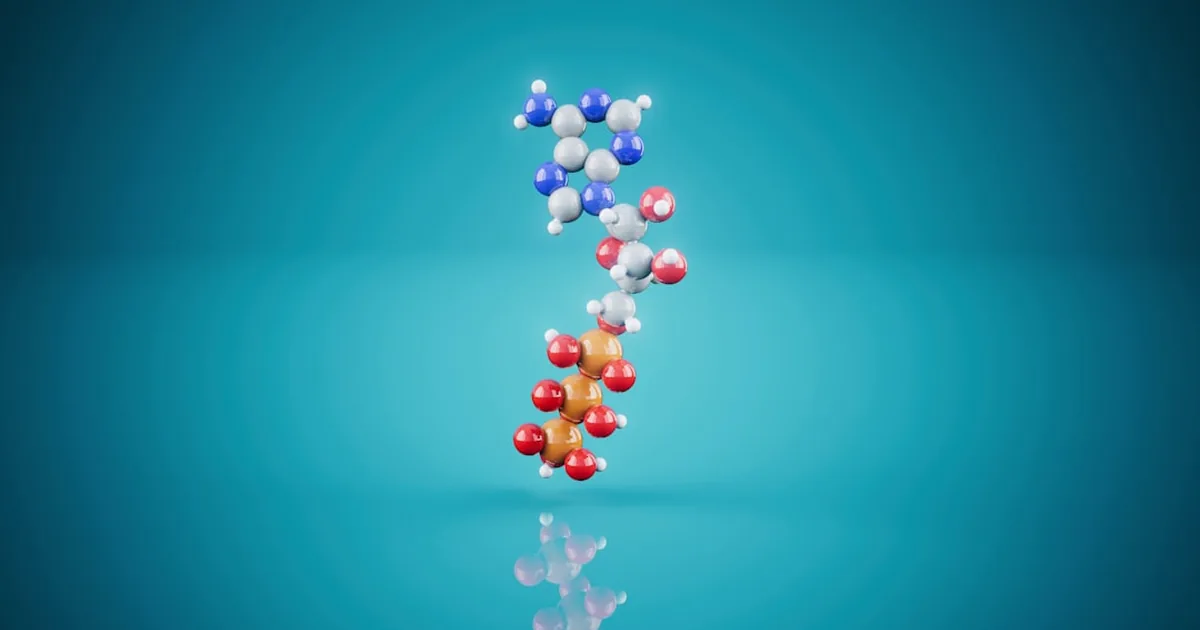
Peptoids vs Peptides: What Changes When the Side Chain Moves
On paper, peptoids and peptides look almost identical — same backbone spacing, same kind of chain. The difference is where a single side chain attaches. Move it from the alpha-carbon to the backbone nitrogen and you change the amide type, erase a stereocenter, rewrite how the molecule folds, and make it far harder for proteases to cut. This explainer walks through that one move and everything that follows from it.
by Research Assistant·
On paper, a peptoid and a peptide look almost like twins. Same backbone spacing, same alternating run of atoms, same basic idea of a chain stitched from repeating units. The whole peptoid vs peptide chemistry difference comes down to one structural move: where a single side chain attaches. In a peptide it hangs off the alpha-carbon; in a peptoid it sits on the backbone nitrogen. The compounds discussed here are research-grade chemicals offered for research use only, and this article is a structural explainer — not guidance for any kind of use. Slide that side chain one atom over and a cascade of consequences follows, reaching into how the molecule is built, how stable it is, and how it folds.
One Atom Over: Where the Side Chain Actually Sits
To see the difference, picture the repeating unit of each chain. A protein or peptide is built from amino acids, and each amino acid has a central carbon — the alpha-carbon — with four things attached: an amino group, a carboxyl group, a hydrogen, and the side chain that gives the residue its personality. Link those amino acids into a chain and the backbone runs nitrogen, alpha-carbon, carbonyl, nitrogen, alpha-carbon, carbonyl, on and on. The side chains stick out from the alpha-carbons, and every backbone nitrogen keeps a hydrogen of its own.
A peptoid keeps that backbone rhythm but relocates the side chain. Instead of branching off the alpha-carbon, the side chain is appended to the backbone nitrogen, as the standard definition of a peptoid spells out. The carbon that was just a plain glycine-like position now sits bare, and the nitrogen that used to carry a hydrogen now carries the chain. That swap is why peptoids have a second, more formal name: N-substituted glycines. Every residue is a glycine whose nitrogen has been substituted with a side group, and a full peptoid is a poly-N-substituted glycine.
Small drawing change, large chemical one. You can hang the same alphabet of side chains on the nitrogen that you'd find on amino acids, but the molecule that results is no longer a peptide. It's a distinct class of peptidomimetic — a synthetic chain designed to echo what peptides do while being made of different parts.
The Knock-On Effects of Moving One Bond
Relocating the side chain isn't a cosmetic edit. It changes the chemistry of the backbone itself, and two of those changes matter more than the rest.
A secondary amide becomes a tertiary amide
In a peptide, each backbone link is a secondary amide: a nitrogen bonded to one carbon chain and still holding one hydrogen. That backbone hydrogen, the N-H, is quietly one of the most important features of the whole molecule. Put the side chain on the nitrogen and it takes that hydrogen's place, so the backbone link becomes a tertiary amide backbone — nitrogen bonded to carbon on every side, no hydrogen left. The headline is simple. Peptoids have no backbone N-H to donate a hydrogen bond. As the same reference notes, peptoids lack the amide hydrogen responsible for many of the secondary-structure elements seen in peptides and proteins. Lose the donor and you lose the glue that ordinarily holds peptide architecture together.
The alpha-carbon stereocenter disappears
The second change is about handedness. A peptide's alpha-carbon usually carries four different groups, which makes it a stereocenter — it has a defined left- or right-handed geometry, and that chirality shapes how peptides fold and how enzymes recognize them. Move the side chain off the alpha-carbon and the carbon is left holding two hydrogens. It's no longer a stereocenter, so the backbone turns achiral at that position. Molecular-dynamics work on peptoid chains describes how the loss of the alpha-carbon stereocenter, the loss of the N-H donor, and the relaxed backbone geometry together give peptoids markedly more conformational freedom than peptides. Fewer built-in constraints tell the chain which way to bend.
How You Build a Peptoid: Submonomer Synthesis
One quiet advantage hides inside that structural change: peptoids are easy to assemble. Peptides are usually built one protected building block at a time, where each amino acid arrives pre-made with its side chain already in place and protecting groups guarding the parts that shouldn't react yet. For the full traditional route, our walk-through of solid-phase peptide synthesis lays it out step by step.
Peptoids take a different and cheaper path called the submonomer method. Rather than one finished monomer per residue, each residue is built in place from two simple, separate pieces. The sequence has two steps. First comes acylation: a haloacetic acid, typically bromoacetic acid, is coupled to the growing chain, laying down the backbone carbon and leaving a reactive halide. Then comes displacement: a primary amine swaps in for that halide through a classic substitution reaction, and in one move it installs both the side chain and the nitrogen. A review of N-substituted glycine oligomer synthesis describes how this two-step submonomer sequence assembles each residue from cheap, commercially available parts.
Why do chemists care? Variety. Because the side chain enters as an ordinary primary amine, and primary amines are everywhere and cheap, almost any amine you can buy can become a side chain. Hundreds of different amines have already been used this way, which hands peptoids enormous chemical diversity at a fraction of what the equivalent peptide variety would cost. For the wider picture of assembly chemistry, our overview of how synthetic peptides are assembled sets the context.
Why Peptoids Shrug Off Proteases
Move the side chain and you also change how the body's molecular scissors see the chain. Proteases — the enzymes that cut peptides apart — are exquisitely tuned to the natural peptide backbone. They recognize the secondary-amide links and the alpha-carbon geometry of ordinary amino acids, lock onto that exact shape, and snip. It's a lock-and-key relationship, and peptides fit the lock.
Peptoids don't. With the side chain on the nitrogen and no alpha-carbon stereocenter, the backbone a peptoid presents simply isn't the shape these enzymes evolved to grab. A review of antimicrobial peptoid structure-activity relationships notes that this shift to a tertiary-amide backbone, free of stereocenters and hydrogen-bond donors, is exactly what gives peptoids their resistance to enzymatic cleavage. The result is strong peptoid proteolytic stability: chains that hold together far longer in the presence of the same enzymes that would quickly dismantle a comparable peptide.
Be precise about what that means, though. Proteolytic stability is a chemical property of the molecule — a statement about how slowly an enzyme can cut it, observed in laboratory settings. It is not a claim about any health outcome. The interesting fact is purely structural: change where the side chain sits, and the chain stops looking like food to a protease.
Folding Without Backbone Hydrogen Bonds
Here's where the missing N-H comes back to matter. The elegant shapes peptides and proteins adopt — the alpha-helix, the beta-sheet — are stitched together by a regular network of backbone hydrogen bonds, each N-H reaching over to a carbonyl oxygen a few residues away. Take away the backbone N-H, as peptoids do, and that whole stitching mechanism vanishes. A peptoid can't fold the way a peptide folds, because it lacks the donors that make peptide folding possible.
That doesn't leave peptoids shapeless. Their order just has to come from somewhere else. Peptoid secondary structure is driven by the side chains themselves and by the behavior of the tertiary amide. Each tertiary amide can sit in a cis or a trans arrangement, and unlike the strongly trans-biased amides of peptides, peptoid amides flip between the two more freely. That cis/trans switching is the main source of a peptoid's conformational variety. Bulky aromatic side chains can bias the backbone toward cis, while other side chains push it toward trans, so chemists can coax a peptoid into ordered shapes — including helices reminiscent of the polyproline type-I helix — by choosing side chains as inducers. A reference overview of peptoids as foldamers describes how their folding is governed largely by this cis-trans isomerization rather than by backbone hydrogen bonding.
One upside falls out of all this. Because peptoid folds don't depend on a delicate hydrogen-bond network, they aren't easily undone by the things that unravel proteins — heat, solvent, or chemical denaturants like urea. The same independence from backbone hydrogen bonding that makes peptoids hard to fold predictably also makes the folds they do adopt unusually rugged. If the broader idea of how stiffness and flexibility shape a molecule's behavior interests you, our piece on how flexible a chain is shapes what it can do is a natural next read.
Frequently Asked Questions
Is a peptoid the same thing as a peptide?
No. They share the same glycine-based backbone spacing, but a peptoid carries its side chain on the backbone nitrogen instead of the alpha-carbon. That single relocation removes the backbone N-H, removes the alpha-carbon stereocenter, and turns each backbone amide into a tertiary amide — so peptoids behave like a distinct chemical class, not a variety of peptide.
Why are peptoids more resistant to proteases than peptides?
Proteases evolved to recognize the natural secondary-amide backbone and alpha-carbon geometry of peptides. A peptoid's side chain sits on nitrogen, so the backbone it presents is not the shape these enzymes clamp onto. With no good fit in the protease active site, the chain is cut far more slowly, which is why peptoids show much greater proteolytic stability in the lab.
What is N-substituted glycine?
It is the chemical name for a peptoid residue. Every peptoid repeat unit is a glycine whose nitrogen carries a substituent — the side chain. Stringing N-substituted glycines together gives a poly-N-substituted glycine, which is exactly what a peptoid is.
Do peptoids fold like peptides?
Not in the same way. Peptide helices and sheets are held together by a regular network of backbone hydrogen bonds, which peptoids cannot form because they lack the backbone N-H donor. Peptoids can still adopt ordered shapes such as helices, but those are driven by side-chain bulk and cis/trans amide preferences rather than backbone hydrogen bonding.
The Takeaway
Almost everything that separates a peptoid from a peptide traces back to one move: sliding the side chain from the alpha-carbon over to the backbone nitrogen. That single shift converts a secondary amide into a tertiary one, erases the alpha-carbon stereocenter, opens the door to cheap submonomer assembly, hardens the chain against proteases, and rewrites the rules of how it folds. Grasp that one structural decision and you've got the fastest way to make sense of any peptidomimetic — a useful lens to carry into related reading on peptide synthesis and on how chain flexibility shapes function.
For research use only. Not for human or animal consumption of any kind. The information in this article is for educational purposes only and is not intended to diagnose, treat, cure, or prevent any disease. The statements made have not been evaluated by the U.S. Food and Drug Administration. These products are NOT FDA APPROVED. Please consult with a licensed healthcare professional before making any decisions regarding your health or research.
Optides LLC is a chemical supplier. Optides LLC is not a compounding pharmacy or chemical compounding facility as defined under 503A of the Federal Food, Drug, and Cosmetic Act. Optides LLC is not an outsourcing facility as defined under 503B of the Federal Food, Drug, and Cosmetic Act.